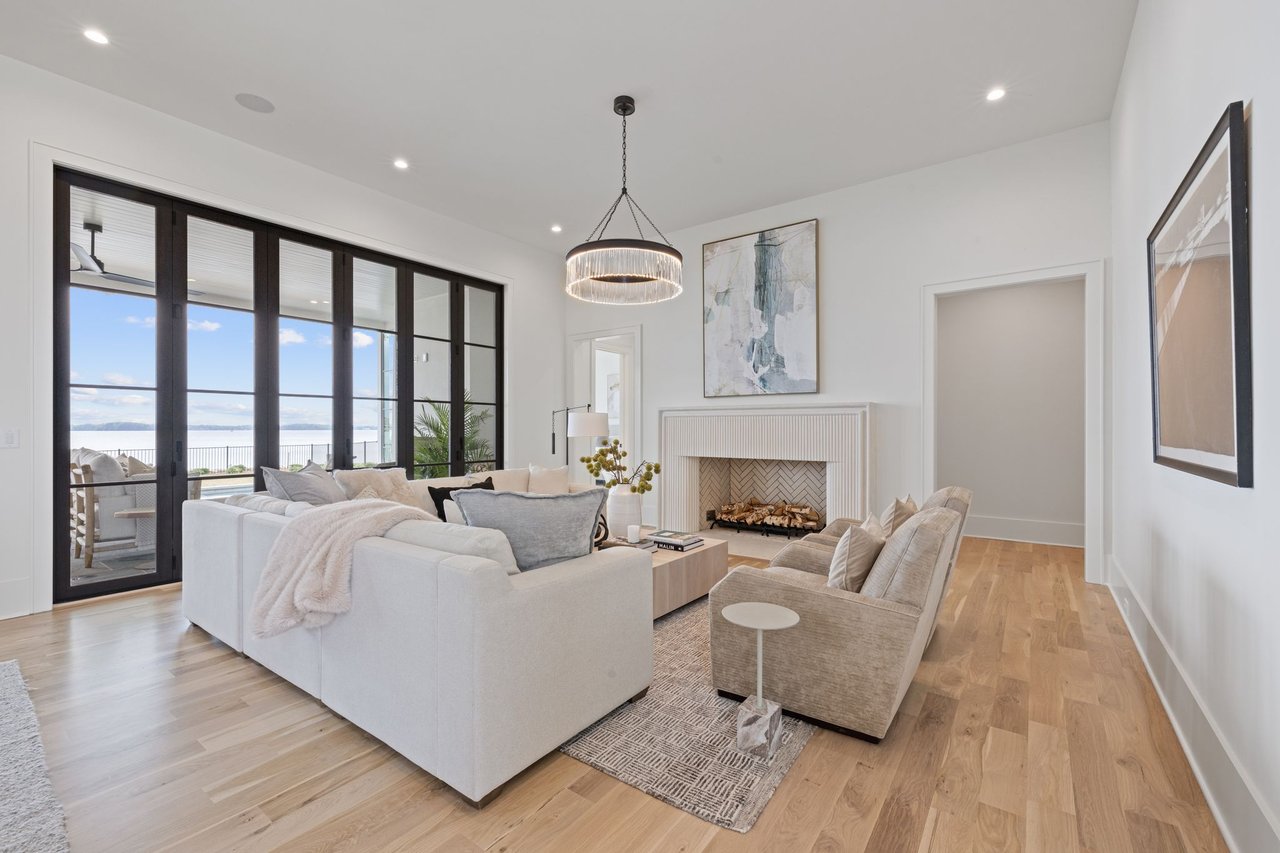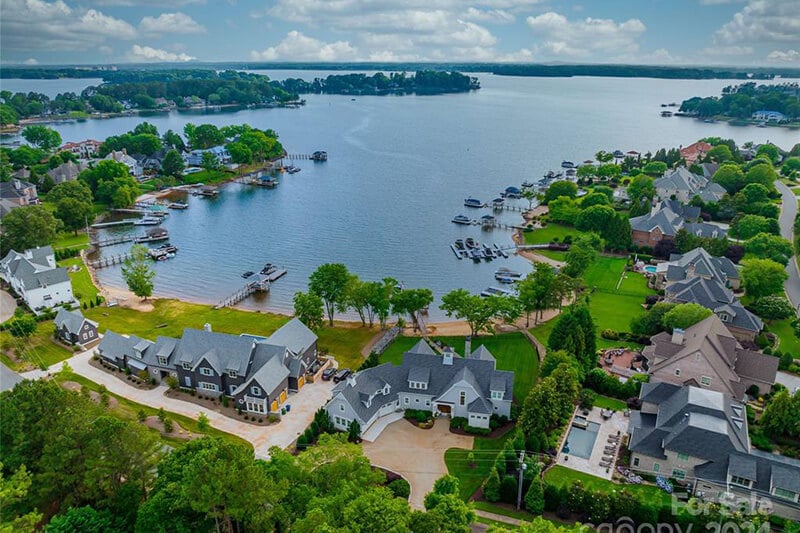
I've walked a lot of west-side homes over 21 years — Denver, Sherrills Ford, Terrell, out toward the Catawba County shoreline — and I can tell you the same thing every contractor and report I've read will tell you: the projects that feel the most exciting to a homeowner aren't always the ones that pay you back at closing. Few renovations recoup more than 100% of what you spend. But a handful of smart, functional, cohesive improvements can move buyers, and they can move your number.
You don't have to take only my word for it. Below, I've pulled the projects that consistently rank highest across the industry's resale data, and then I've added a section most agents skip — the upgrades that look like wins but quietly cost you when it's time to sell. The goal here isn't to sell you on a remodel. It's to help you spend where it counts.
A quick reality check before the list: most sellers do this work whether they plan to or not. Zillow's 2024 research found 72% of sellers took on at least one improvement project to get their home ready. So the real question isn't whether you'll touch the house — it's where.
Start at the curb, because buyers do
Here's the honest-to-God truth about the highest-return project in nearly every report: it's not the kitchen. It's the garage door.
A new garage door is the rare upgrade that can pay back more than it costs. Depending on which study you read, the numbers swing — the 2025 Cost vs. Value data Zillow cites puts the recoup around 349% (the single highest-ROI project on the list, at roughly $4,300 to install), while Opendoor pegs it closer to 194%. Either way, you're getting back more than you put in. The reason is simple: on a front-facing home, the garage door is one of the biggest visual elements there is, and a clean, modern one tells a buyer the home's been cared for before they ever step inside.
The front door is the next-best bet, and the data backs it hard. A steel entry door returns somewhere in the range of 188% to 216% of its roughly $2,400 cost across the Cost vs. Value and Opendoor figures, and the 2025 Remodeling Impact Report from the National Association of REALTORS® lists a new steel front door at the very top of its cost-recovery rankings at 100%. A new door is immediately apparent — it lifts curb appeal while also upgrading security and smart features. That's a lot of return for one weekend.
A few more exterior projects that consistently earn their keep:
- Manufactured stone veneer. It can add a skirt of stone to your siding at relatively little cost and dramatically change how the home reads from the street — Cost vs. Value data shows it recouping north of 200%.
- Siding replacement. Fiber-cement siding recoups well over 100% in the Cost vs. Value figures (Opendoor puts it around 88%), and it's the rare project that's both curb appeal and low-maintenance — a real selling point for a cost-conscious buyer.
- Pressure-wash and refresh. Opendoor notes that improving curb appeal can lift value by around 7%. A power wash, fresh mulch, updated house numbers and exterior lighting (often under $500) signal a home that's been maintained.
I live a few miles from the water out here, and I'll tell you what I see at showings: buyers on the west side are paying for a feeling — more home, more land, less congestion. The exterior is where that feeling starts.
Kitchens and baths — refresh, don't reinvent
Kitchens and baths have always sat near the top of the list, and they still do. But there's a line between a smart refresh and an over-build, and crossing it is one of the most common mistakes I see.
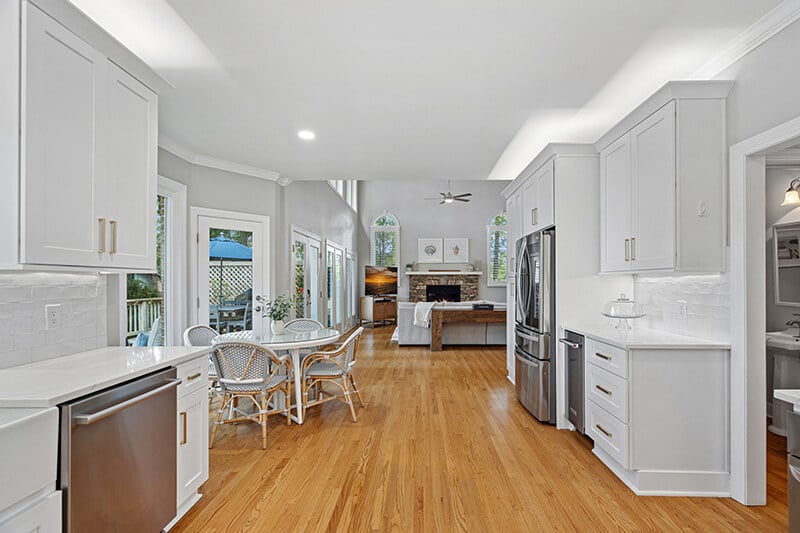
The data favors the minor remodel. A midrange minor kitchen remodel recoups around 113% in the Cost vs. Value figures Zillow cites and about 96% per Opendoor — that's new cabinet fronts, updated counters, modern fixtures, efficient appliances, not a gut-to-the-studs rebuild. The NAR Remodeling Impact Report puts both a complete kitchen renovation and a minor kitchen upgrade at about 60% cost recovery, which tells you the same thing from another angle: the bigger you go, the smaller the share you get back. Cabinet refacing or paint runs 30–50% less than new cabinets and transforms the room in about a week. Stick to finishes most buyers want — white, gray, or navy cabinets, quartz or granite counters, stainless appliances — and save the bespoke choices for a home you plan to keep.
Bathrooms follow the same logic. A midrange bath remodel recoups roughly 74–80% across the reports. You rarely need to rip out tile to make a real difference — a new vanity and faucet ($500–$1,500), fresh grout, and updated lighting (often under $500) can modernize a dated bath for very little. One caution that HGTV's experts and the old Remodeling data both make plain: don't pour money into remodeling your only bathroom. If your home is short on baths for its bedroom count, your dollars are better spent adding one. A National Association of Realtors study found that adding a bathroom raised a home's sale price by about 8.7% — more than twice the lift of adding a bedroom.
More usable space — if it's the right space
Square footage sells, and finishing space you already have is one of the better ways to get it. HGTV cites research that every 1,000 square feet added can boost a sale price by more than 30%.
Converting an attic or basement into a true living area — a bedroom, a family room, a home theater — adds usable space and opens your home to buyers with bigger families. The NAR Remodeling Impact Report puts a basement conversion at about 71% cost recovery and an attic conversion around 67%, and Opendoor notes a finished basement family room can return up to 86%. A closet renovation, of all things, lands near the top of the NAR list at 83%.
The keyword is usable. Family Handyman's experts are blunt that a home office renovation or an oversized main-bedroom addition doesn't move the market needle much — great if you'll use them, but not resale plays. Build the space buyers are actually searching for.
The unglamorous truth: maintenance wins
I'll be candid, because that's how I work with sellers. Before you spend a dime on anything "sexy," make sure the bones are right.
Every realtor and contractor in the HGTV piece said the same thing, and one line stuck with me: "If the roof is leaking, buyers won't get beyond that. I don't care how awesome the kitchen is." Buyers want to take the basics for granted — roof, HVAC, plumbing. A new kitchen loses its shine fast if there's a musty smell coming from the basement.
The numbers agree. Zillow's research shows turnkey homes sell for about 2.9% more than expected, and a fresh coat of interior paint was the single most common pre-listing project sellers took on (32% of them). Attic insulation can recoup over 100% of its cost. Energy-efficient touches buyers increasingly ask about — a smart thermostat ($200–$300), attic air sealing, efficient appliances — are low-cost and signal a home that's ready to live in, not fix up. Before listing, take care of the small stuff: clean the gutters, reseal grout, service the HVAC, repair leaky plumbing, replace cracked tiles, and clear out overgrown landscaping.
That's the foundation. Everything else builds on it.
Bonus: The "upgrades" that don't add value (and sometimes cost you)
Now the part most articles leave out. These are the projects that feel like improvements but tend to shrink your buyer pool or your price. I see homeowners talk themselves into several of these every year, so let me walk through the trade-offs honestly.
Swimming pools — the genuine both-sides call. This is the one I won't give you a flat answer on, because the answer depends on your market. Many buyers see a pool as a safety concern or a maintenance burden, and Zillow's research shows you rarely recoup the cost — an in-ground pool can run up to $67,000 plus another $6,000 for fencing. Opendoor agrees that an oversized pool rarely pays off. But both note the exception that matters out here: in a luxury market where the neighbors all have one, a well-done pool can hold its own (and a saltwater pool adds about 2% over chlorine, per Zillow). On a $1M+ lakefront property, that calculus can be different than it is two neighborhoods over. It's worth a real conversation before you dig.
Going too neutral — or too custom. The old advice was to strip out all personality and create a blank slate. Zillow's newer data pushes back: homes lacking custom features may leave a 3% price boost on the table — about $10,800 on a $360,000 home. The move isn't a hotel room; it's high-quality, functional character that reflects a lifestyle.
The all-white kitchen. It was the gold standard for years, but Zillow's research now shows it can actually lower a sale price by more than $600 as buyer taste shifts toward moodier, more sophisticated tones like charcoal or graphite.
Marble floors and laminate counters — opposite ends, same lesson. Marble reads luxurious but is porous, scratch-prone, and high-maintenance; Zillow finds it's tied to a nearly 2% price decrease (bluestone and travertine perform better). At the other extreme, laminate counters can make a kitchen feel dated — homes mentioning laminate sold for about 2.5% less, roughly $9,000 on a $360,000 home, while quartzite is associated with a 5.2% boost.
Trading a bedroom for a closet, or a garage for a bedroom. Value tracks bedroom count and parking. Converting a bedroom into a walk-in closet pulls your home out of buyers' search filters and is tied to selling about 0.5% less. Converting a garage into living space removes parking and storage buyers expect — a garage can carry roughly a 0.9% premium. If you need more room, an ADU (a casita or guest suite) is the better answer, and buyers like the rental-income potential.
Boutique fixtures and a metal roof. That $3,000 designer faucet won't move your appraisal — buyers and appraisers rarely distinguish it from a quality $300 one, so choose well-made trending finishes like matte black or brushed gold instead. And while a metal roof lasts a long time, its high upfront cost (around $26,000) doesn't come back at sale; Zillow ties it to selling about 0.42% under expectation. If your roof is sound, spend on landscaping and a power wash instead.
Bad DIY. I love a capable homeowner, but visible DIY mistakes — uneven tile, a poorly laid floor — read as hidden problems to buyers, who'll try to deduct the cost of a professional redo from their offer. Know your limits on finish work.
A few more that Family Handyman flags as weak resale bets: backup generators (limited everyday value outside rural or off-grid homes), backyard patios (often recover less than half their cost), sunrooms (high maintenance — a screened porch is the smarter spend), and oversized garage or main-bedroom additions buyers don't notice.
The bottom line
Spend on the exterior first impression, refresh kitchens and baths without over-building, finish the space buyers are actually searching for, and never let the flashy stuff distract you from sound maintenance. Match every improvement to what your neighborhood and your buyer actually value — pour $10,000 into a stove in the wrong house and, as one realtor put it, "it just doesn't compute."
If you're thinking about what your west-side home might be worth — or which of these projects is actually worth doing before you list — call or text me anytime at (704) 799-5233. You won't wait long for a response, and we'll figure out the smart move together.